

-
About Kexun
-
-
-
Applications of constant temperature and humidity laboratories
Category: Industry News
Constant temperature and humidity laboratory The air conditioner is the heart of temperature and humidity control, with high accuracy and low failure rate. Therefore, air conditioning is needed to adjust the cold air. There are already two methods on the market. One is variation. The other is the chilled water regulation method. The demand for constant temperature and humidity environment is increasing, and the application fields are becoming wider and wider.
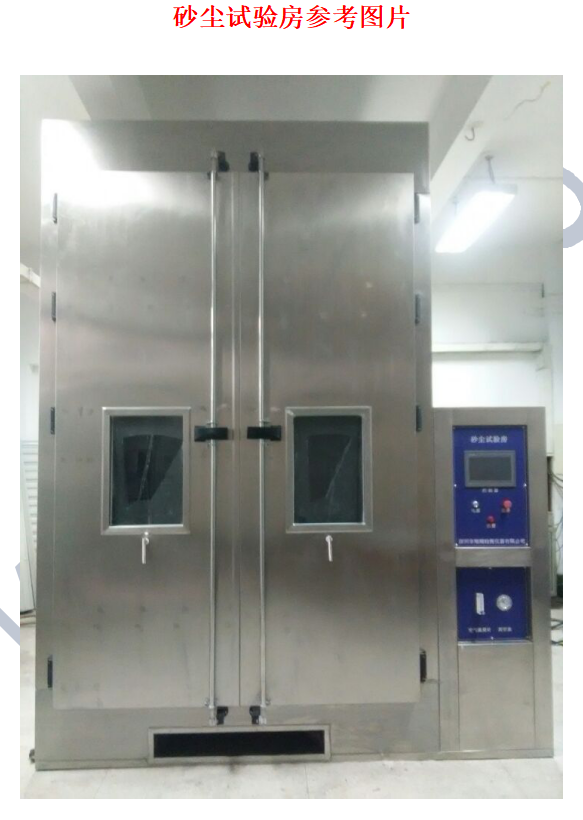
What are the applications of constant temperature and humidity laboratories?
The field of constant temperature and humidity laboratories has increasingly strict requirements for quality management, an increasing demand for constant temperature and humidity environments, and a wider range of applications. Laboratory air conditioners are the heart of temperature and humidity control, with high accuracy and low failure rates.
The constant temperature and humidity laboratory test chamber can independently perform salt spray tests and constant temperature and humidity tests, with conversion functions that do not interfere with each other. Appropriate sized liquid immersion tanks can also be placed inside the chamber. The experimental method is a vertical two-compartment type, with a high-power linear motor at the top performing vertical linear conversion via a controller. The conversion time between the high-temperature chamber and the salt chamber is approximately 10 seconds.
Upper/lower height limit photoelectric switches.
The sealing between the upper, lower, and two layers adopts a baffle-type sealing method. That is, when the sample enters or leaves the salt pan or high-temperature chamber, the middle baffle will automatically fall off to ensure the sealing between the upper and lower layers.
Temperature recovery time is less than 5 minutes.
Custom-sized salt solution immersion tanks are placed inside the chamber, with the temperature inside the tank ranging from 30 to 50, adjustable temperature, real-time constant temperature display, and PT100 platinum resistance temperature sensor.
The constant temperature and humidity laboratory uses a coil cooling method salt solution cooling system.
The dehumidification and humidification system operates through three interconnected systems: a 3360 refrigerant circulation system, an air circulation system, and an electrical control system.
Refrigerant circulation system: The liquid refrigerant in the evaporator begins to absorb the heat of the air (air cooling dehumidification) and evaporates, ultimately forming a certain temperature difference between the refrigerant and the air. The liquid refrigerant also completely evaporates into a gas, is sucked in and compressed by the compressor (pressure and temperature increase), and the gaseous refrigerant is cooled by the condenser (air cooler/water cooler). After throttling through the expansion valve (or capillary), the low-temperature, low-pressure refrigerant becomes the evaporator, completing the refrigerant circulation process.
Air circulation system: The fan draws air from the ventilation holes, and the air passes through the evaporator (cooling, dehumidification), humidifier, and electric heater (heating), and is sent to the user's required space through the air outlet. The ventilated air mixes with the air in the space and returns to the ventilation holes. The electrical automatic control system includes the power supply and automatic control parts.
The power supply section automatically controls the power supply of the compressor, fan, humidifier, etc., through the contactor. The automatic control section is divided into temperature, humidity control, and fault protection parts. Temperature and humidity control compares the temperature and humidity controller with the user-set temperature and humidity, automatically operating the compressor (cooling, dehumidification), and humidifier.
Related Information
Research, design and production of environmental testing machines
Contact Us
Address: No. 1, Building 1, Zhenrong Road, Wusha, Chang'an Town, Dongguan City, Guangdong Province
Scan the code to add friend
Dongguan Kexun Precision Instrument Co., Ltd. Copyright © 2020
SAF Coolest v1.3.1.2 设置面板 GAGSE-ZGYF-JXADE-AFZ
无数据提示
Sorry, the current column is being updated, please look forward to it!
You can view other columns or returnHomepage
V1.3.1 SVG图标库请自行添加图标,用div包起来,并命名使用
CONTACT US:
Email:
TEL:
在线客服添加返回顶部
右侧在线客服样式 1,2,3 1
图片alt标题设置: Dongguan Kexun Precision Instrument Co., Ltd.
表单验证提示文本: Content cannot be empty!
循环体没有内容时: Sorry,no matching items were found.
CSS / JS 文件放置地